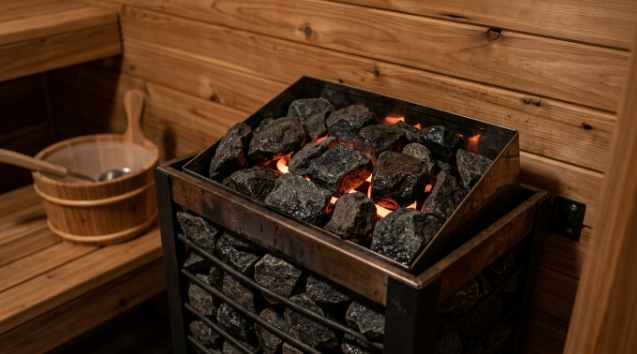
Winter is when an electric sauna heater earns its cost fastest, since a 15 to 20 minute session at 170 to 190 degrees against a cold house or a snowy backyard delivers a bigger contrast than the same session in July. It is also, somewhat counterintuitively, the easier season to install one: outdoor installers have thinner schedules once the peak spring and summer building season ends, and a heater bought in the fall is ready for the exact weather that makes it most worth having. Here is how to plan the timing, the preheat difference, and the small adjustments cold weather requires.
Step One: Check the Heater’s Cold-Weather Rating
Before assuming a heater is winter-ready, check the manufacturer’s rated operating temperature range, since most residential electric heaters are built to run safely well below freezing but a small number of budget imports carry no stated cold-weather rating at all. An outdoor cabin also needs its water supply, if it has one for steam, protected from freezing, either by draining the line after each use or running it through insulated, heat-traced piping. A heater with no clear cold-weather spec on the listing is worth a direct question to the seller before ordering.
See also: Air Duct Cleaning Checklist for Boston Homeowners
Step Two: Budget Extra Preheat Time
A cabin sitting at 20 degrees Fahrenheit takes noticeably longer to reach a 180 degree target than the same cabin starting at 65 degrees in summer, often adding 10 to 15 minutes to preheat depending on heater output and insulation quality. Starting the heater from a digital control panel before getting undressed, rather than waiting until the last minute, solves most of the frustration here. Owners who find winter preheat times annoying often discover the fix is better door and wall insulation rather than a bigger heater, since heat loss through a poorly sealed door frame is usually the actual bottleneck.
Step Three: Time the Purchase and Install Before the Rush
Late fall, roughly October through early November in most climates, tends to be the easiest window to book an outdoor sauna install. The ground has not frozen yet, electricians and installers have not hit the holiday scheduling crunch, and the heater arrives in time for the coldest months rather than sitting unused through a mild autumn. Buyers who wait until January often find both the unit and the installer booked out several weeks, right when the desire to use a hot cabin is strongest. Indoor installs are less weather-dependent overall, but booking early still avoids competing for the same installer slots everyone else wants once the cold actually arrives.
Step Four: Adjust the Session Itself for Cold Weather
A cold walk from the house to an outdoor cabin, or a cold plunge or snow roll immediately after a session, is part of what makes winter sauna use appealing to a lot of owners, but it changes a few practical habits. A robe and slip-on sandals staged right at the cabin door save the discomfort of a barefoot dash across frozen ground. Towels left in the cabin overnight in freezing weather can pick up dampness that takes longer to dry between uses, so moving them indoors after each session is a small habit that avoids mildew. None of this requires extra equipment, just a slightly different routine than summer use.
Step Five: Compare Winter-Ready Models Before Buying
Not every listed heater states a cold-weather operating range clearly, and that detail is worth checking model by model rather than assuming it. Current lineups from specialty sauna retailers, including SweatDecks, typically list the kilowatt rating, rock capacity, and rated operating range together on each product page, which makes it straightforward to compare a handful of options before deciding. A heater bought without checking this spec is the most common reason an owner discovers a cold-weather limitation only after the first freeze.
What Does Research Say About Sauna Use in Colder Climates?
Much of the foundational sauna research comes from Finland, a country with long, cold winters, which makes the population studied relevant to anyone using a sauna through a similarly cold season. A review in The American Journal of Medicine covering both benefits and risks of sauna bathing noted that regular use across seasons, not any single session, is the pattern most associated with the reported cardiovascular findings. A 2018 review in the American Journal of Physiology examined how the body responds to heat and cold exposure more broadly, including adaptations relevant to a hot sauna followed by cold outdoor air. A separate systematic review in Evidence-Based Complementary and Alternative Medicine reached similar conclusions about regular dry sauna bathing. These are associations built on consistent, moderate use over years, not proof that any one winter session produces a specific health outcome.
Step Six: Plan for Snow and Ice Around an Outdoor Cabin
An outdoor cabin in a snowy climate needs a clear, non-slip path from the house, since a short walk across icy ground barefoot or in sandals is the most common minor injury risk winter sauna owners report. A simple gravel or paver path, shoveled and salted through the season, solves most of this for a modest one-time cost. Roof and door clearance also matter more in winter than any other season: snow load sitting against a cabin door can freeze it shut overnight, so a roof pitch steep enough to shed snow, or a small overhang above the door, is worth checking before the first heavy snowfall rather than discovering the problem on a cold morning.
Rock and heater maintenance schedules do not need to change for winter, but checking the rock basket for ice buildup after a session, if any snow or moisture gets tracked in near the heater, is a quick habit worth adding. A digital control panel mounted outside the cabin is also worth checking periodically in freezing weather, since extreme cold can occasionally affect display responsiveness on older units, though this is rarely a functional problem beyond a few seconds of lag.
Frequently Asked Questions
Does cold weather change how long a sauna heater takes to preheat? Yes. A cold cabin can take 10 to 15 minutes longer to reach target temperature than in summer. Extra insulation or a slightly larger heater helps close that gap.
Can an electric sauna heater run safely in freezing temperatures? Most residential heaters are rated well below freezing, but water lines and electrical components around the cabin need winterizing. Check the manufacturer’s rated operating range before winter.
Is it cheaper to run a sauna heater in winter? Running cost per session is slightly higher since the heater works harder against colder ambient air, though the difference is usually modest.
What is the best month to install a new sauna heater? Late fall, before the ground freezes and before holiday scheduling gets tight, is generally the easiest window for outdoor installs.
References
- Clinical Effects of Regular Dry Sauna Bathing: A Systematic Review, Evidence-Based Complementary and Alternative Medicine, 2018
- Benefits and risks of sauna bathing, The American Journal of Medicine, 2001
- Effects of heat and cold on health, with special reference to Finnish sauna bathing, American Journal of Physiology, 2018
By Tom Bradshaw